
New Franchise vs Resale Franchise: Which Is Safer for Buyers?
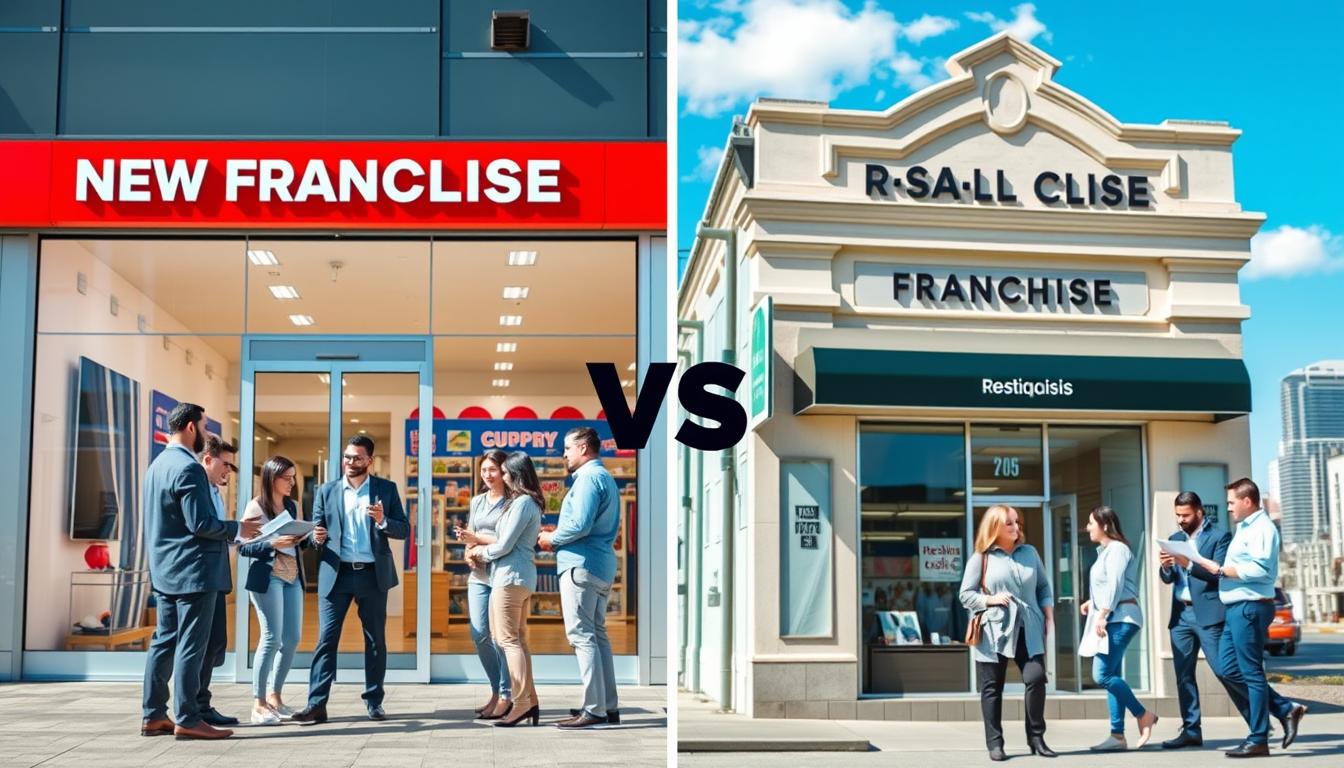
Did you know that nearly one in three small business buyers say their biggest regret was underestimating operational risk? That stat frames this guide.
I wrote this piece at Franchisee.ai to help you weigh the risks between a new franchise vs resale franchise option. My goal is clear: give plain-English advice so you can avoid costly mistakes when you buy a business.
Whether you are a first-time buyer or a multi-unit operator, choosing the right path affects your finances and freedom. I lay out what to expect from a startup offering and from a proven resale. You will see how history, support, and cash flow shape that choice.
I review franchise resale details and startup trade-offs so you can make an informed decision that fits your experience and goals in the United States.
Key Takeaways
- I created this guide to simplify a complex decision.
- Understand risk differences between startup and resale options.
- Focus on support, cash flow, and historical performance.
- Match the opportunity to your experience and goals.
- Use this as a first step before committing capital.
Understanding the New Franchise vs Resale Franchise Debate
Deciding whether to build from scratch or buy an existing unit starts with clear-eyed risk assessment. Each path has distinct rewards and pitfalls that affect cash flow, timelines, and daily operations.
When you evaluate a resale, you step into a business with an operational footprint and customer history. That can shorten the ramp-up time and reveal realistic revenue patterns.
Keep reading, or take one practical action from here.
Subscribe for new franchise insights
1 email per week. Practical franchise playbooks and templates.
Want franchisee leads for your business?
Share a few details. We will reach out with a clear next step.
Buying into a startup offers control and brand shaping, but it often brings higher initial uncertainty and development work.
- Match risk to temperament: I find most successful owners choose the model that fits their tolerance for ambiguity.
- Legacy matters: Past management affects staff, suppliers, and growth potential when considering resales.
- Due diligence is essential: Look beyond surface numbers to judge sustainability of earnings.
Understanding the nuances of franchise ownership is the first step to building a steady income stream. For a deeper look at how the business model works, read my guide on the franchise business model.
The Reality of Starting a New Franchise Location
Starting from scratch forces an owner to manage leases, permits, and construction before the doors open. That work shapes timelines and cash flow long before you see customers.
Site selection and development is a multi-step process. You follow franchisor guidelines, but you negotiate the lease and secure permits. You also oversee the build-out and sign off on contractors.

Site Selection and Development
Picking a prime territory is one major advantage. You can match the location to your market and long-term vision for the brand.
Expect due diligence on traffic, competitors, and zoning. These checks save time and money during construction.
Building Your Team from Scratch
Recruiting a strong team is critical when there is no existing customer base. You will hire, train, and set the culture from day one.
- The development process puts hiring and onboarding squarely on you.
- High-performing staff speed your ramp to break-even.
- Many owners prefer these opportunities to be the public face of their business.
If you want to compare this path with buying an existing unit, read more about buying an existing unit to see which model fits your goals.
Benefits of Acquiring an Existing Franchise Business
Buying an existing location often cuts the wait for cash flow. I find this is the single biggest draw for many buyers. You see income sooner and reduce startup risk.
Immediate Cash Flow Potential
When you purchase a resale, you step into a working operation with customers and staff already trained. That setup helps you focus on growth instead of early-day fixes.
Companies like Healthier 4U Vending add value by supplying quality machines and hands-on training. That training makes it easier to maintain the income levels set by the prior owner.
- Buying existing locations often provides immediate income and shorter ramp-up time.
- You inherit vendor contracts, a customer base, and staff who know daily routines.
- Physical infrastructure and relationships are usually already in place.
| Benefit | What You Get | Why It Matters |
|---|---|---|
| Cash flow | Revenue from day one | Reduces need for extended capital |
| Operational staff | Trained employees | Smoother handoff and continuity |
| Customer base | Established market | Better income predictability |
| Suppliers | Existing vendor terms | Less negotiation and setup time |
Before you buy, review historical performance and staffing records. That history helps you forecast future income and spot opportunities to improve the market position.
For more listings and guidance on evaluating an existing franchise for sale, see existing franchise for sale and a practical guide on how to buy a franchise business.
Comparing Upfront Costs and Capital Requirements
Upfront capital needs often decide which path a buyer can actually afford.
Initial franchise fees typically range from $35,000 to $50,000 for new builds. Beyond that, construction, equipment, and opening inventory can push total investment much higher.
When you consider an existing franchise purchase, remember you often pay for goodwill and an established market presence. That can lower the time to income but raise the purchase price.
I always flag transfer fees as a variable cost. Some franchisors set modest transfer fees, while others charge more. Check the FDD and ask the franchisor directly.
- Compare total capital: add fees, build-out, and working capital before you decide.
- Evaluate income potential: weigh current cash flow from a resale against startup ramp for a new build.
- Use the FDD: the document shows the total investment range for each franchise resale opportunity.
“Know your capital limits before you commit; the math determines long-term viability.”
| Cost Item | Typical Range | Why It Matters |
|---|---|---|
| Initial franchise fee | $35,000–$50,000 | Paid to franchisor; secures rights and support |
| Construction & equipment | $50,000–$300,000+ | Major capital outlay for new builds |
| Purchase price (existing) | Varies widely | Includes goodwill and existing income stream |
| Transfer & other fees | $0–$25,000+ | Depends on franchisor policy and agreement |

Evaluating the Role of the Franchise Disclosure Document
The franchise disclosure document is where I start every serious evaluation. This legal document outlines costs, obligations, and the franchisor’s track record. It is the authoritative source for capital ranges and performance details every buyer must see.
Reviewing Item Nineteen
Item 19 covers financial performance representations. I use it to estimate likely ROI and to test whether projected earnings match market reality.
- Check historical sales: compare unit economics to your expected location and market.
- SBA financing: lenders rely on this document when approving loans, so accuracy matters.
- Professional review: I always advise an accountant or franchise attorney to verify numbers and assumptions.
Understanding Territory Protection
Territory terms in the disclosure document define your market rights. Confirm these to avoid future overlap with other franchisees or brand-driven cannibalization.
“Treat the FDD as your contractual map — it reveals costs, limits, and the true shape of your opportunity.”
| Section | What to Look For | Why It Matters |
|---|---|---|
| Item 3 | Business background of franchisor | Shows brand stability and leadership history |
| Item 7–8 | Initial investment & fees | Helps plan short-term capital and ongoing costs |
| Item 19 | Financial performance data | Key for estimating ROI and lender confidence |
| Item 12 | Territory and transfer rules | Protects your market and future resale value |
Whether you are considering an existing franchise or a new opportunity, the disclosure document should guide your due diligence. For a deeper legal primer, see my post on understanding franchise disclosure agreements.
Why Franchisor Approval is Critical for Resales
Franchisor sign-off is the single legal gate that can make or break a resale closing. I tell buyers this up front because the approval controls whether the purchase moves forward.
Every agreement requires that the brand approve the transfer of ownership. If the franchisor does not accept you as the new owner, the sale can be cancelled and your deposit may be at risk.
Expect a formal review and transfer fees to cover administrative work. The review protects the brand by ensuring qualified people run existing locations.
- Communicate early and often with franchisors so requirements are clear.
- Confirm what paperwork, experience, and financials they need before you sign an offer.
- Build contingencies into the purchase contract for an approval delay or denial.
“Treat franchisor approval as a critical contingency in your purchase timeline.”

Assessing the Operational History of a Business
Before you commit cash or sign a contract, dig into the past performance. I start by asking for at least three years of financial statements. Those records show true income trends and one-off spikes.
Analyzing Staff Retention
High staff turnover signals trouble. Ask about average tenure and why people left. A stable team keeps customers happy and operations smooth.
Check the customer base and systems: a business with loyal customers and efficient systems needs less immediate work. That lowers the capital you must reserve after closing.
- Verify the seller’s statements with the franchisor so numbers match brand records.
- Inspect the location and local market reputation to avoid hidden declines.
- Plan for working capital if you will upgrade equipment or processes.
“Ask for verified financials and staff histories—these facts separate a smart buy from a risky one.”
For a practical checklist on transferring ownership and what to expect, see a helpful guide on the pros and cons of buying a franchise.
The Importance of Professional Due Diligence
A careful review of records is the single best defense against costly surprises. When I assess a potential purchase, I treat due diligence as the work that protects my capital and time.
Start with verified numbers. Verify financial statements, tax returns, and the status of the commercial lease. Confirm vendor contracts and any pending obligations that move with the business.
I recommend hiring a qualified franchise attorney early. An attorney reviews legal terms, flags transfer rules, and spots clauses that could limit your options after closing.
Use a checklist for the diligence process. Check staff records, customer trends, equipment condition, and any pending litigation. Never skip steps—hidden risks often show up only under detailed review.
- Hire a franchise attorney to review agreements.
- Verify seller claims against original records and franchisor files.
- Confirm lease and transfer mechanics before you commit.
“Due diligence turns hope into evidence and reduces surprises.”

For a practical primer on legal checks and evaluating opportunities when buying existing franchise locations, see this guide on franchise due diligence and my checklist on how to evaluate franchise business opportunities.
Matching Your Personality to the Business Model
Some people thrive on building systems; others excel at improving what already works.
I ask buyers to be honest about their daily style. If you love structure, creating a site and processes may fit your long-term goals.
If you prefer tweaking an existing operation, taking over a location with customers and staff can be more satisfying. That choice affects how quickly you see results after a purchase.
Match strengths to tasks. Your energy should align with the work you will do every day as an owner. Otherwise, the market will wear you down.
I recommend listing three core skills you enjoy—hiring, marketing, or systems—and compare them to the demands of the business you consider.
| Profile | Typical Strengths | What to Expect | Best Indicator |
|---|---|---|---|
| Builder | Designing systems, hiring | Longer ramp, high control | Enjoys setup work |
| Operator | Optimizing staff, customer care | Faster cash flow, steady duties | Prefers immediate results |
| Hybrid | Strategy + daily ops | Flexible role, varied tasks | Likes both change and routine |
“Pick the path that fits your strengths; happiness and success follow.”
Navigating Training and Ongoing Support Systems
Training and ongoing support often separate a smooth opening from an early stumble.

The franchisor’s systems matter as much as the territory you choose. Regardless of whether you buy an existing franchise or start fresh, the franchisor provides standardized training to bring you up to speed.
The UPS Store offers a useful example: it has more than 5,500 locations and 40+ years of experience. Entrepreneur ranked The UPS Store #1 in the 2026 Franchise 500. That scale supports strong, repeatable training and post‑opening help.
- Mandatory training: Even buyers of resales must complete the franchisor’s onboarding process.
- Shared systems: Access to the network lets you leverage other franchisees’ knowledge and proven processes.
- Evaluate support: Confirm the brand has the infrastructure to scale training, tech, and operational help before you commit capital.
- Talk to peers: I always recommend speaking with existing franchisees to verify the training quality and ongoing support.
| Support Area | What to Expect | Why It Matters |
|---|---|---|
| Initial training | Classroom + on‑site coaching | Faster ramp to consistent operations |
| Ongoing support | Field visits, helpdesk, updates | Keeps systems and marketing current |
| Peer network | Mentors and user groups | Real-world tips that save time and capital |
“A reliable training process turns brand standards into daily habits.”
Conclusion
Choosing between a build and a purchase will shape your daily work and income for many years. I believe the right path depends on your skills, capital, and appetite for risk.
As Joel Libava has shown across 2,000+ articles, there is no single correct choice for every aspiring owner. Whether you favor immediate cash flow from a resale or the control of a new franchise, thorough research matters.
, Use the resources linked here and visit our partner pages to compare opportunities and tools. That step helps with lead generation and gives affiliate resources that can guide your next move.
FAQ
What are the main differences between buying a newly opened location and purchasing an existing one?
How should I use the Franchise Disclosure Document when evaluating a purchase?
What does Item 19 tell me and why does it matter?
How important is territory protection for a resale purchase?
What should I inspect in the financial records of an existing operation?
How do I assess the condition of equipment and the physical location?
How much should I expect to pay in upfront fees and ongoing costs?
What role does franchisor approval play when buying an existing unit?
How do I evaluate staff and management when taking over an operation?
What due diligence professionals should I hire before buying?
How do I verify the customer base and local market demand?
What are common red flags when comparing offers?
How much working capital should I set aside after closing?
Can I negotiate the purchase price or transfer terms?
How does training and ongoing support affect my decision?
How do I match the business model to my skills and goals?
Want franchisee leads for your business?
Share a few details. We will reach out with a clear next step.
Subscribe for new franchise insights
1 email per week. Practical franchise playbooks and templates.