
Pet Franchise Opportunities: Costs, Demand, and Buyer Checklist

71% of U.S. households—about 94 million homes—now have a pet. That simple fact shows a huge, ongoing demand that can shape smart investment choices today.
I write from experience to give clear, practical guidance for serious buyers. I help you research, compare, buy, operate, and grow a sustainable business without costly missteps. My focus covers FDD review, Item 19 analysis, royalty structures, and SBA financing so you know the true cost of entry.
Whether you are a first-time buyer or a multi-unit operator, my checklist walks you through site selection, unit economics, ROI, hiring, and compliance. For a real-world example of fees and disclosures, see details on Pet Evolution at Pet Evolution financials.
Key Takeaways
- I provide tools to research, compare, and buy wisely.
- Understand FDDs, Item 19, royalties, and true investment needs.
- Demand is strong—use unit economics to forecast ROI.
- Plan for site selection, staffing, and local marketing.
- Use this checklist to reduce risk before you commit capital.
The State of the Pet Industry in the United States
A steady rise in animal ownership is driving new demand for local care and service businesses. I track the numbers because they reveal where investments and services make sense.
Keep reading, or take one practical action from here.
Subscribe for new franchise insights
1 email per week. Practical franchise playbooks and templates.
Want franchisee leads for your business?
Share a few details. We will reach out with a clear next step.
Market Growth and Consumer Spending
The United States market now tops roughly $150 billion in annual revenue. That scale shows owners treat animals as family and spend across food, health, boarding, and grooming.
71% of U.S. households — about 94 million homes — report having at least one companion animal. This broad base keeps demand steady year-round.
The Popularity of Dogs and Other Household Pets
Dogs remain the largest segment: nearly 68 million households have a dog. That concentration drives major spending on food, vet care, and training.
Beyond dogs, the market includes cats, birds, reptiles, and small mammals. This variety creates diverse service needs for grooming, boarding, and specialty retail.
- Revenue scale: ~$150B annually across the sector.
- Household reach: 71% ownership in the United States.
- Dog prevalence: 68 million households with at least one dog.
| Metric | Value | Implication for Businesses |
|---|---|---|
| Annual spend | $150 billion | Large, stable customer base for services and retail |
| Households with animals | 94 million (71%) | Widespread local demand across metro and suburban areas |
| Households with dogs | 68 million | High need for grooming, training, and boarding services |
Why Pet Franchise Opportunities Are a Smart Investment
I believe buying into an established brand can fast-track your path from startup risk to steady revenue. You tap a proven model that works across economic cycles and market sizes.
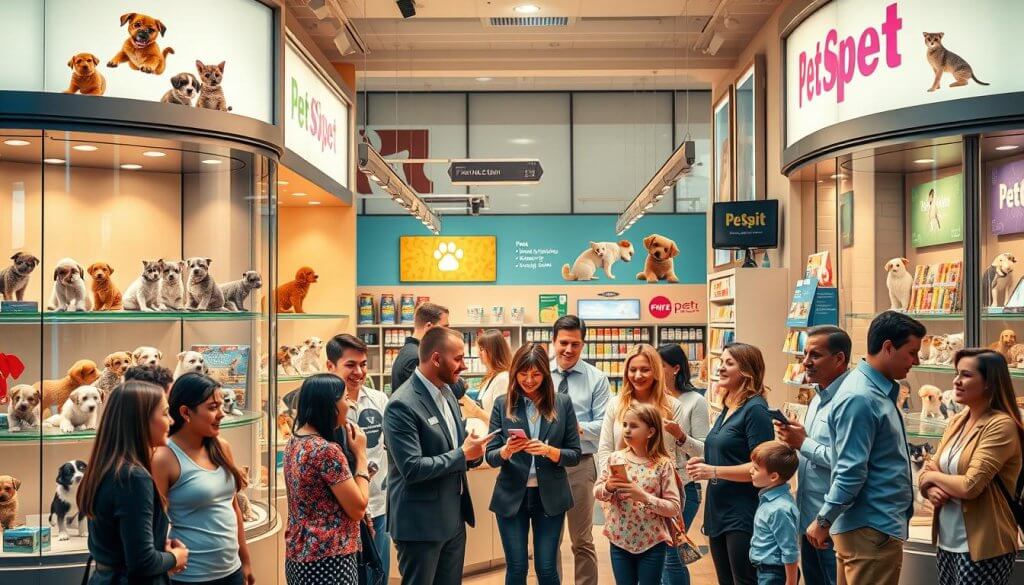
When you join a well-known network, you inherit a loyal customer base and a reputation that a new business must earn. This reduces early marketing costs and speeds break-even.
- Training and support: comprehensive onboarding and ongoing help for operators.
- Supply chain: standardized sourcing cuts costs and simplifies operations.
- Compliance and HR: access to resources that protect your investment.
My experience shows the strongest owners use corporate systems to grow, not fix daily problems. That focus on expansion is the real advantage of a reputable franchise business.
Key Trends Shaping the Pet Market
I see two big forces—connected devices and wellness offerings—driving the next phase of industry growth. These changes affect how I evaluate potential investments and local services.
The Rise of Smart Technology and Wellness Services
Connected tools now deliver real-time location and health tracking. That tech gives owners more control and genuine peace mind about daily care.
Wellness is also moving front and center. High-quality shampoos, conditioners, and natural diets are selling fast. I watch these shifts because they change average spend per visit.
- The pet industry is adding smart monitoring and health tracking devices.
- Pet owners want premium grooming and natural food options.
- Data from 2023 suggests the market could grow nearly 5% per year.
- More owners buy insurance to offset unexpected veterinary costs.
Bottom line: Leveraging tech and wellness in your local offering is a clear edge. I recommend operators adapt now to meet evolving pet ownership habits and capture higher lifetime value.
Understanding the Financial Realities of Pet Franchising
Start by mapping expected costs and cash flow so there are no surprises. The typical total investment in the United States can range from $29,000 to $1.6 million, depending on format, location, and build-out requirements.
I recommend exploring SBA financing early. Lenders prefer proven models, and that can make capital easier to secure than for an independent business.

You must read the FDD line by line. Pay attention to royalty rates, required marketing contributions, and the initial franchise fee. Those items materially affect your month-to-month cash flow.
- Know your liquid capital: it determines how long you can operate before break-even.
- Model unit economics: realistic revenue and cost forecasts improve your odds of positive ROI.
- Plan a buffer: cover at least the first year of operating expenses to avoid early shutdown.
For practical examples and listings, see a curated directory of options and buyer guidance at pet franchise listings and a short guide on aligning a brand with your goals at how to choose a franchise.
Evaluating Different Types of Pet Service Models
Choosing the right service model shapes cash flow, staffing, and customer reach from day one.
Grooming and Professional Training
Grooming and dog training draw steady demand from owners who want expert care and behavior help.
These services often have higher per-visit revenue and predictable scheduling. I recommend checking required certifications and average ticket sizes.
Retail Stores and Specialty Supplies
Retail lets you sell food, toys, and niche supplies alongside services. That mix creates multiple income streams.
Combine retail with grooming or training to raise lifetime value and smooth seasonal dips.
Pet Waste Removal and Maintenance
Waste removal services, like Pet Butler, deliver recurring revenue and low per-unit cost. They fit owners who prefer field operations over storefronts.
Pet sitting and walking models need strong local marketing and franchisor support to scale. Evaluate territory rules and training aid carefully.
“The best model matches your skills to customer needs and offers at least two revenue streams.”
| Model | Typical Startup Range | Key Advantage |
|---|---|---|
| Grooming & Training | $30k–$200k | High ticket, strong margins |
| Retail & Specialty | $20k–$250k | Multiple revenue lines |
| Waste Removal / Sitting | $5k–$60k | Recurring contracts, low overhead |
- Tip: Align your choice with budget and daily work style.
- Tip: Look for brands that support training and local marketing.
Essential Due Diligence for Prospective Franchisees
Validation calls and legal review turn marketing claims into verifiable facts. I start by calling current franchisees to confirm training, support, and real revenues.
Read the Item 19 carefully. It is the clearest window into performance and helps estimate ROI for your investment.

- I verify the level of initial training and ongoing support the franchisor provides.
- I analyze the full range of services the parent company sells to ensure they match my long-term plan.
- I evaluate culture and values — fit matters as much as numbers.
- I always hire a franchise attorney to review contracts before I sign.
Due diligence is more than math; it is about uncovering how the system works day to day.
“Talk to multiple franchisees, review Item 19, and get legal counsel — then decide with confidence.”
Top Pet Franchise Opportunities to Consider
Here are leading names I watch when advising buyers on service models and entry costs.
Sit Means Sit is a top dog training brand founded by Fred Hassen. It suits operators who want a skills-focused model with high per-visit revenue.
Pet Butler offers pet waste removal and has operated since 1988. The franchise fee is $12,500 and the total investment ranges $44,452–$47,890. This model favors owners who prefer field work and recurring routes.
Fetch! Pet Care targets local territories with an initial investment of $19,997–$28,167. It blends pet sitting and dog walking, providing a low-cost entry and flexible scheduling for new owners.
Dogtopia is a higher-cost dog daycare option, with a total investment of $367,625–$837,075. It appeals to those who want a safe, premium social setting that delivers steady revenue and owner peace of mind.
- Scenthound — wellness-focused grooming; 42 locations and growing.
- Pet Supplies Plus — large retail experience, often $500,000+ total investment.
My advice: match the model to your budget and daily work style. Speak with development teams and existing owners to confirm support levels before you commit.
“Choose a model that fits your passion and provides realistic unit economics.”
Navigating Risks and Operational Challenges
I focus on the problems I see most often and offer clear fixes. Running a local care business brings steady revenue, but daily tasks can hide risks.

Avoiding Common Pitfalls in the Pet Industry
Don’t lose sight of strategy. It is easy to get buried in operations and stop planning for growth.
Labor costs are usually the largest variable expense. Track hours, use efficient schedules, and audit payroll monthly.
- Use software to automate bookings and client messages to prevent burnout.
- Research local demand before committing to a specific model like dog training or specialty care.
- Keep compliance current to avoid legal and reputational risk.
“Work with an experienced franchisor or mentor to adopt proven systems and avoid common mistakes.”
| Common Pitfall | Impact | Mitigation |
|---|---|---|
| Operational overload | Stalled growth, missed revenue targets | Delegate, standardize tasks, schedule planning time weekly |
| High labor cost | Compressed margins | Optimize shifts, cross-train staff, use part-time resources |
| Poor market fit | Low demand for services in range | Market study, pilot services, adjust offerings annually |
Annual reviews help you adapt your strategy to changing owner needs and keep the investment viable year after year.
My Personal Checklist for Evaluating Pet Franchises
I keep a concise checklist to cut through sales talk and find the numbers that matter.
Verify Item 19 first. I confirm the FDD’s financial disclosures are complete and realistic. That tells me what current owners actually earn.
Look for multiple revenue streams. I prefer models that combine retail, grooming, and professional care to smooth seasonal dips.
Assess training and support. I confirm the depth of initial onboarding and ongoing programs so I can run the business well.
Talk to franchisees. I call several operators to learn real daily challenges and the true level of support.
Site and brand fit matter. I do a site selection review and check brand reputation in local markets.
“Make sure total investment and royalties fit your cash plan before you commit.”
| Checklist Item | What I Verify | Decision Impact |
|---|---|---|
| Item 19 | Revenue, averages, ranges | Realistic ROI modeling |
| Revenue Streams | Retail + services mix | Smoother cash flow |
| Training & Support | Initial + ongoing programs | Operational readiness |
| Franchisees & Site | Owner interviews + location study | Operational risk & demand fit |
I also recommend reading a short guide on how to select a brand to align the model with your investment goals.
Conclusion
Wrapping up, I want to give clear next steps so you can move from research to action with confidence.
Investing in the pet industry can be rewarding for owners who plan carefully and commit to quality care. By choosing a proven franchise model, you gain training, systems, and scale that ease startup risk.
I urge you to use the checklist in this guide to run thorough due diligence and align any purchase with your financial plan. Speak with current owners, review Item 19, and model cash flow conservatively.
Disclosure: this article may contain affiliate links. I may earn a commission if you follow recommendations. For more research, see my guide to the best pet franchises guide and a practical how-to on how to buy a franchise.
Thank you for reading. I wish you the best as you build a strong local business and lasting customer relationships.
FAQ
What is the typical total investment to start a pet franchise business?
How strong is market demand for animal care services in the United States?
Which service models tend to be most profitable for a new owner?
What ongoing fees should I expect as a franchisee?
How much support do franchisors usually provide during launch and operations?
Are there specific licenses or insurance requirements I should budget for?
How can I evaluate territory potential before buying?
What are the biggest operational challenges new owners face?
Can I run a service-based business part-time at first?
How do I assess franchisor financial performance and success rates?
What marketing works best to attract dog owners and families?
Is there room for specialization, like senior-dog care or training-focused services?
What are typical revenue streams for a full-service operator?
How important is technology in running these businesses efficiently?
What questions should I ask during discovery day with a franchisor?
Are there environmental or waste-handling rules for removal services?
How long does it usually take to break even?
What return on investment should I realistically expect?
How do I protect my reputation and ensure repeat business?
Want franchisee leads for your business?
Share a few details. We will reach out with a clear next step.
Subscribe for new franchise insights
1 email per week. Practical franchise playbooks and templates.